

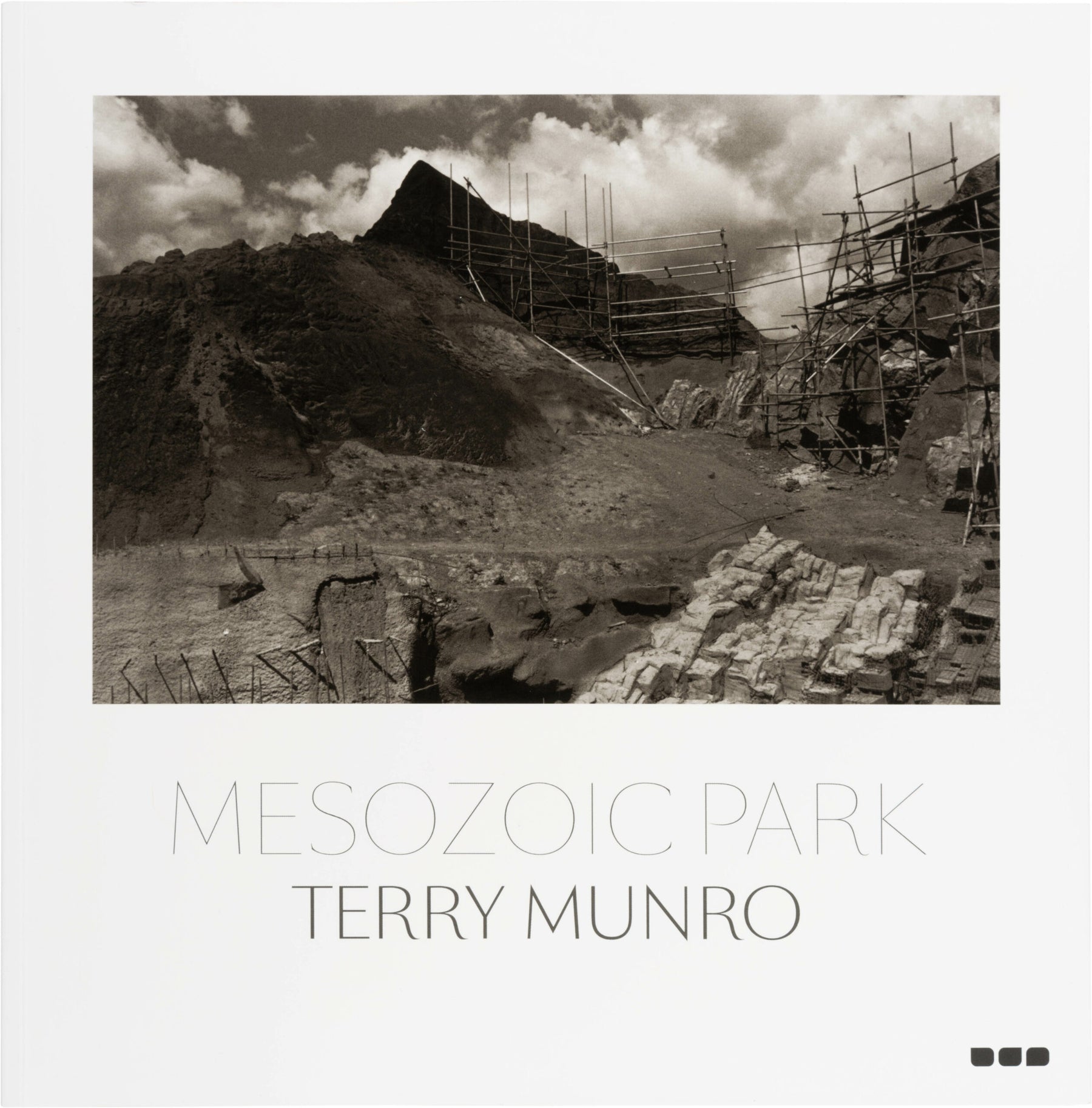
Mesozoic Park: Terry Munro
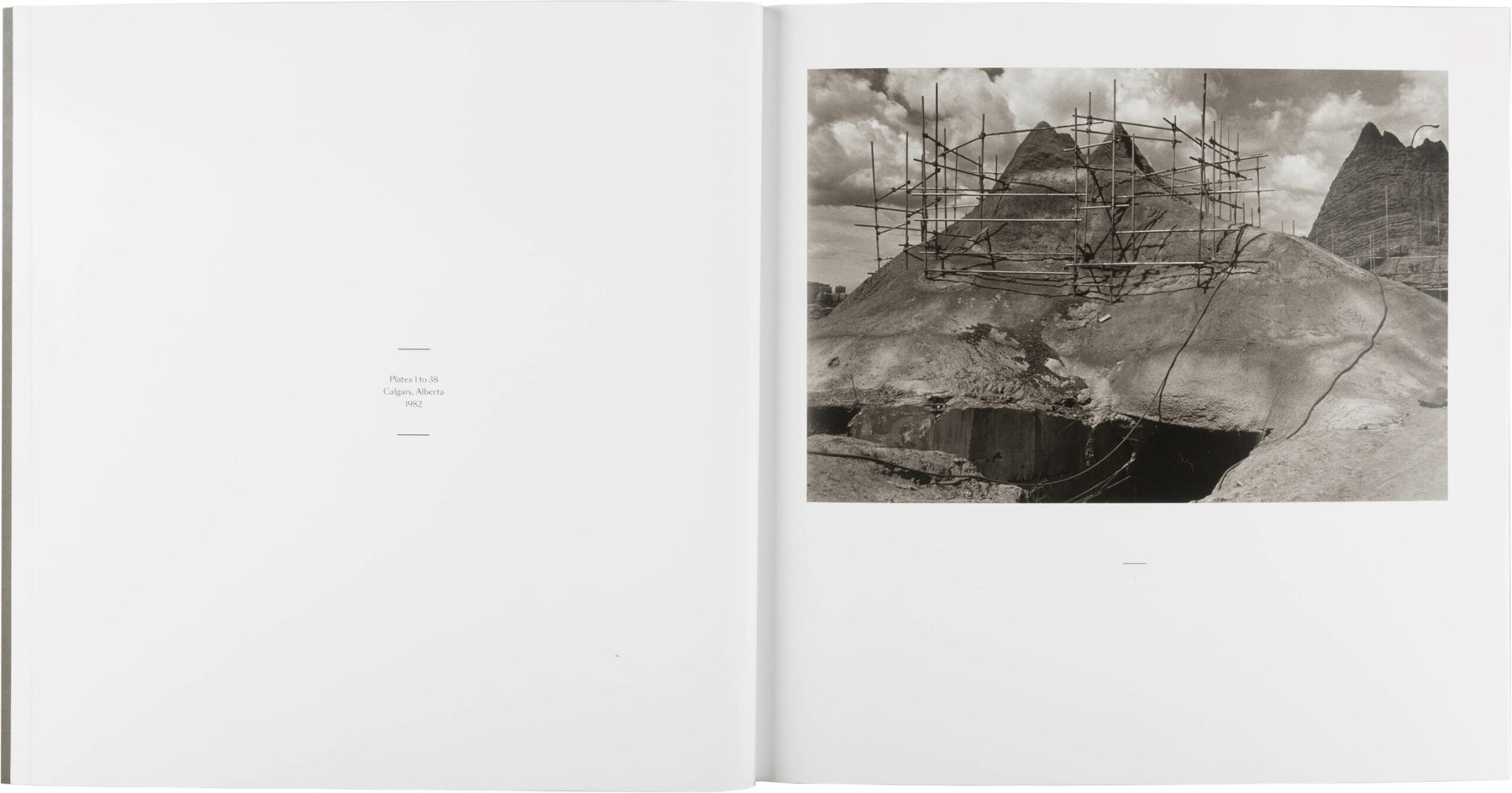
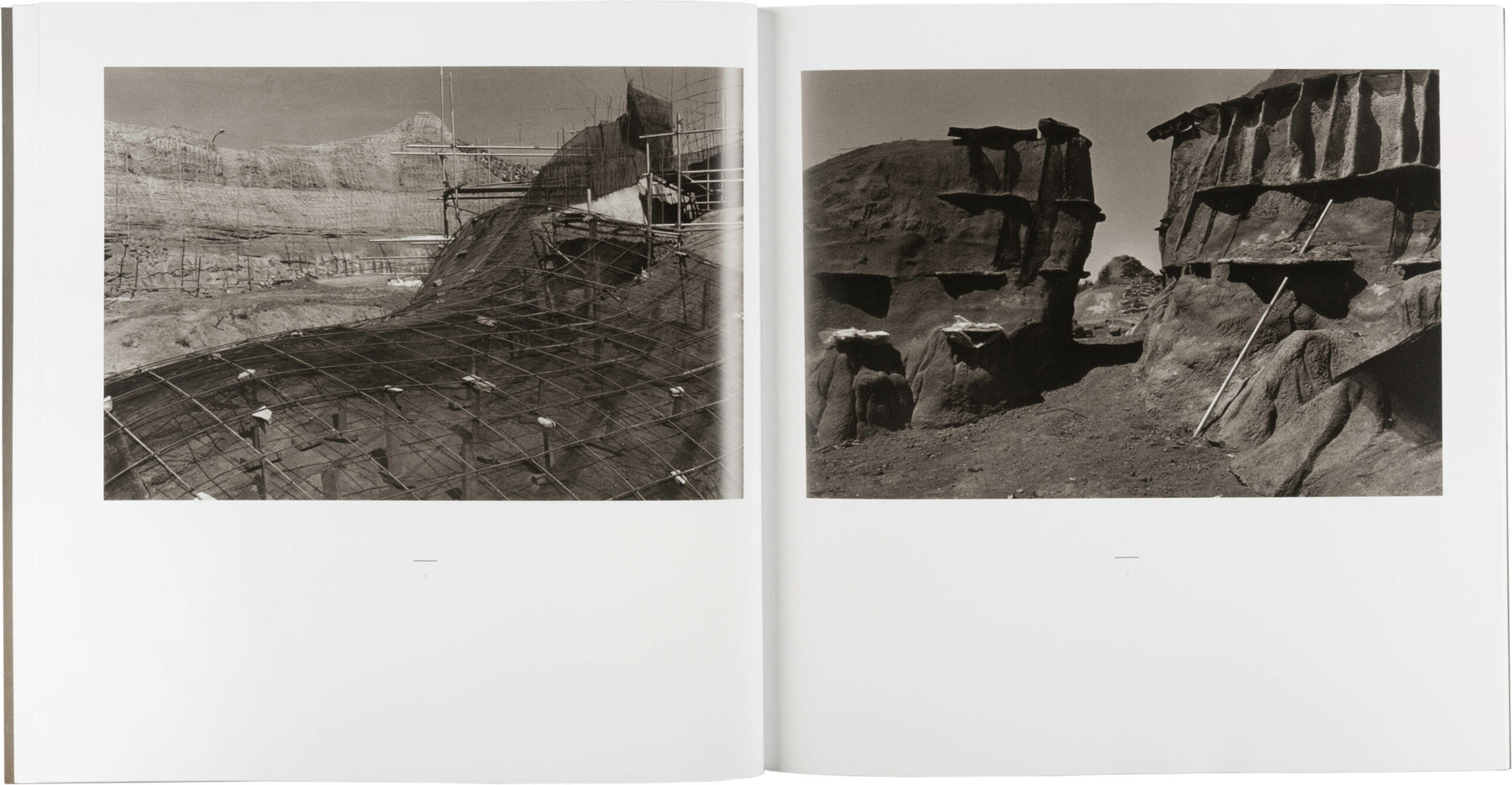
Mesozoic Park is an intriguing series of photographs documenting the construction of a (pseudo) prehistoric landscape in Calgary, Canada in the early 1980s. The history of photography has been dominated by the landscape: from its state as a pristine natural phenomenon, to its altered forms, and then to the manufactured, of which the city’s Prehistoric Park is a prime example. The site includes multiple geologic structures that humans have built to mimic nature. The images in the monograph address the illusions that humanity creates for itself, as in our increasing quest to find substitutes for ‘the real’. The simulated environment in Mesozoic Park focuses on the earth and landscape as packaging or amusement, and more importantly, as a site for social and political inquiry.
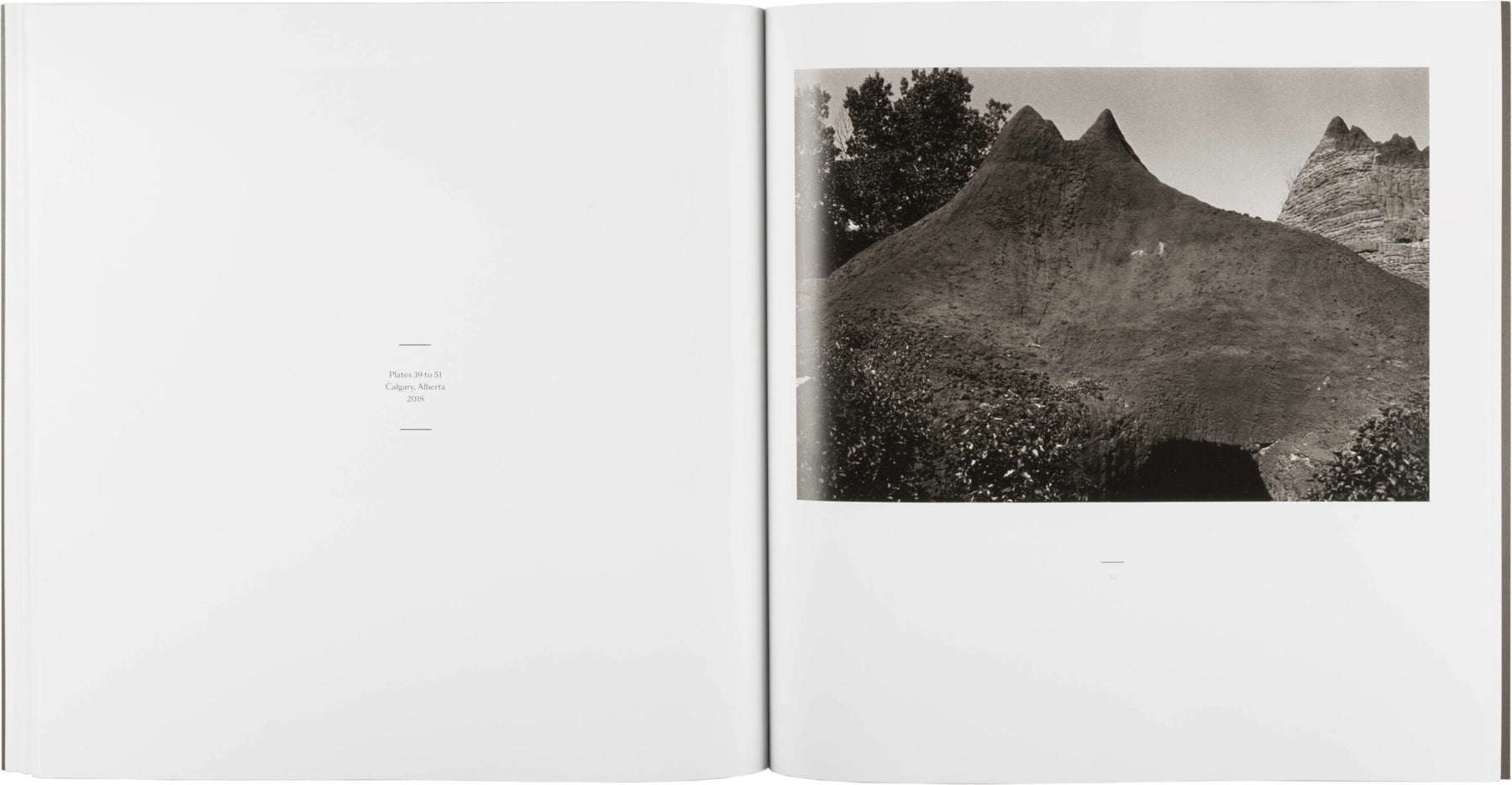
The black and white photographs, printed in duotone, document a geological dream world in which a ‘primordial’ landscape has been cleverly designed and programmed for an artificial visitor experience. By exploring the park in great detail, Munro offers privileged access to what we never get to see: the construction of a facsimile panorama that will provide visitors with the illusion of time travel. The real and false are confused, no longer relevant in this walk through a purported 65 million year-old landscape. The book also contains photographs which show the artificial human construct in 2018.